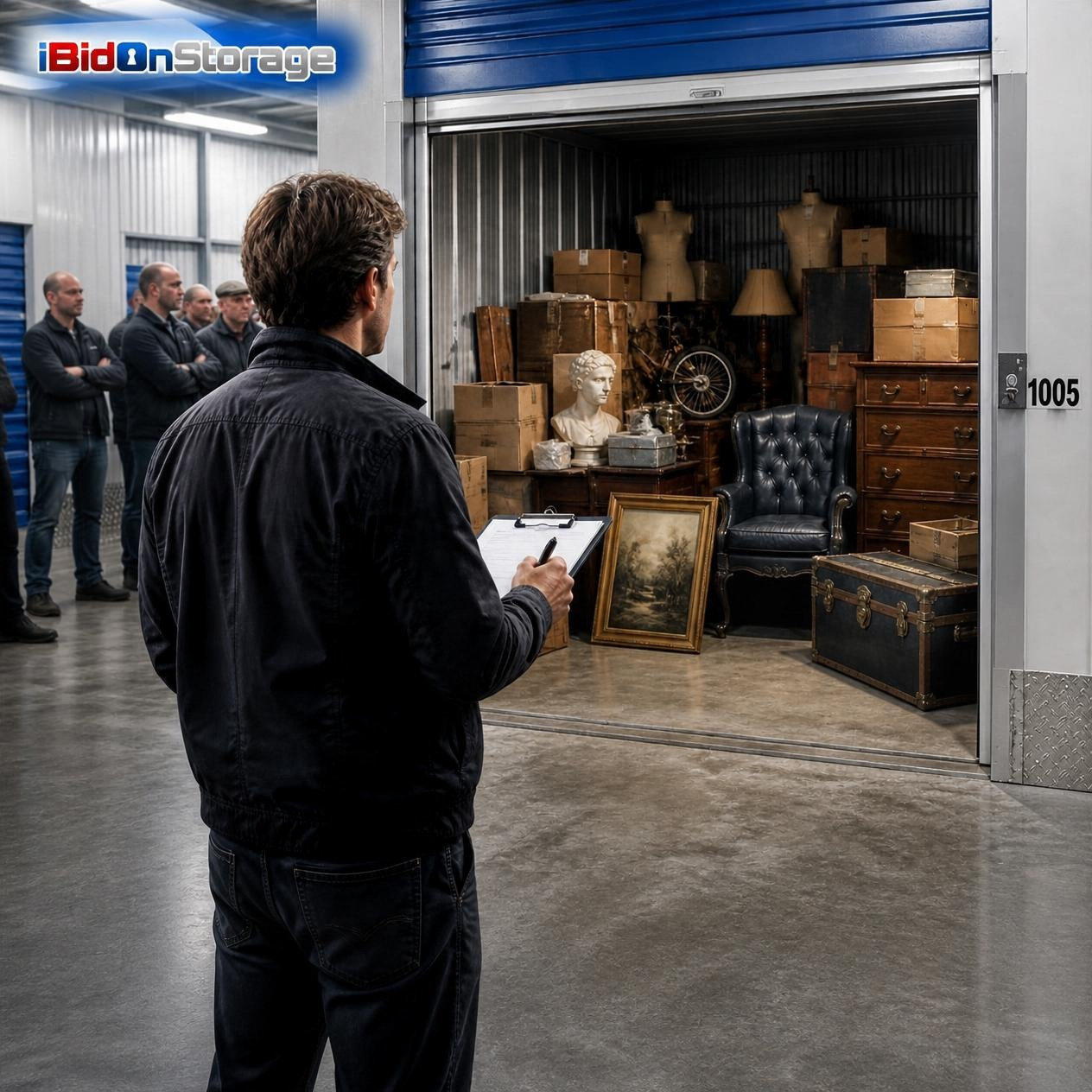
How Much Should You Bid at a UK Storage Auction?
You have spotted a storage auction with furniture, tools, or collectables that catch your eye. The photographs look promising, and you are ready to bid. But how much should you spend?
A sensible bidding limit starts with the contents you can assess, the costs of collecting them, and what you plan to do with them afterwards.
Whether you are buying for yourself or sourcing stock to resell, here is a practical way to work out your budget before the bidding begins.
Start with what you can see.
Examine every photograph and read the full description. Identify the items you recognise and consider their visible condition.
If you intend to resell, research realistic second-hand values. Where possible, look at completed sales for comparable items rather than relying on asking prices. An advertised price tells you what a seller hopes to receive; it does not establish what someone will pay.
Be cautious with items you cannot assess properly. An untested television, an unidentified tool, or a sealed box should not carry the same estimated value as an identifiable item in confirmed working condition.
Base your budget on the available evidence. Treat any unexpected finds as a bonus.
Add the costs beyond your winning bid.
Your winning bid is only part of your budget.
iBidOnStorage’s UK buyer’s premium is currently 17.5% of the sale price, including VAT on the premium. A winning bid of £400 therefore attracts a £70 buyer’s premium, bringing the purchase total to £470 before collection costs.
You should also allow for:
Check the individual auction’s terms for any additional charges or deposit requirements before bidding.
A worked example: calculating your maximum bid
Imagine you are considering a lot whose identifiable contents you conservatively estimate could generate £800 in resale proceeds.
You allow £150 for collection, preparation, selling costs and your time, and want to leave £180 as a margin for your effort and the uncertainty involved.
Your calculation would look like this:
| Budget item | Amount |
| Estimated resale proceeds | £800 |
| Less allowance for other costs and time | −£150 |
| Less desired margin | −£180 |
| Available for the winning bid and buyer’s premium | £470 |
With a buyer’s premium of 17.5%, divide £470 by 1.175:
*Maximum bid: £400*
At that price, your bid and premium total £470. Adding your £150 cost allowance brings the estimated overall cost to £620, leaving the planned £180 margin if the contents achieve £800.
This is an illustration, not a prediction of returns. Lower selling prices, additional costs or unsold items would reduce that margin.
Check that collection fits your budget.
Before placing a bid, make sure you can collect everything within the stated deadline.
The usual clearance period on iBidOnStorage UK is 72 hours from notification, unless the individual auction states otherwise. Buyers are responsible for removing all the contents covered by the sale.
A nearby lot may make more sense for you than a similar lot several hours away. Consider the volume, vehicle capacity, access arrangements and number of trips required.
If a cleaning deposit applies, budget for that money to be available as well. Although refundable when the relevant conditions are met, it still affects how much cash you need at the time.
Buying for yourself? Use a different comparison.
If you intend to keep the contents, resale margin may be less relevant.
Instead, compare your total expected cost with what you would comfortably pay for the items you actually want. Include the effort and expense of collecting and dealing with everything else in the lot.
For example, if you mainly want a dining table and chairs, assess whether those items justify your total spend without depending on finding something valuable in the remaining boxes.
Set your limit before the auction becomes competitive.
Write down your maximum bid before bidding starts. If the price passes that figure, be prepared to let the lot go.
Your budget should reflect your own costs and plans. Another bidder may have cheaper transport, more storage space or a different use for the contents.
For your first purchase, consider a manageable lot close to home. It allows you to learn how collection, sorting and valuation work before committing to something larger.
Ready to put your budget into practice? [Browse current UK storage auctions](https://www.ibidonstorage.co.uk/online-storage-auctions), review the listings and find a lot that suits you.*
For more information about bidding, fees and collection, visit our [buyer information page](https://www.ibidonstorage.co.uk/how-it-works/For-Bidders/) and [FAQs](https://www.ibidonstorage.co.uk/faq).